Choosing the right automation solution starts with an assessment of your business needs and objectives. Get a clear understanding of what you aim to achieve - are you looking to increase efficiency, reduce costs, improve customer service, or all of the above? Identifying these goals will help guide you toward the most suitable solution for your business.
Next, consider your budget constraints and the scalability of potential solutions. Automation can range from simple, low-cost tools to comprehensive, high-investment systems. It's essential to find a solution that not only fits your current budget but can also grow with your business.
Then, evaluate your existing technology and the skillsets of your team. Understanding what technology you already have in place and whether your team has the necessary skills to implement and manage new systems is crucial. Additionally, ensure that any planned automations are being built on systems that you’re confident will be used long-term, to reduce the risk of wasted resources and the need for future overhauls.
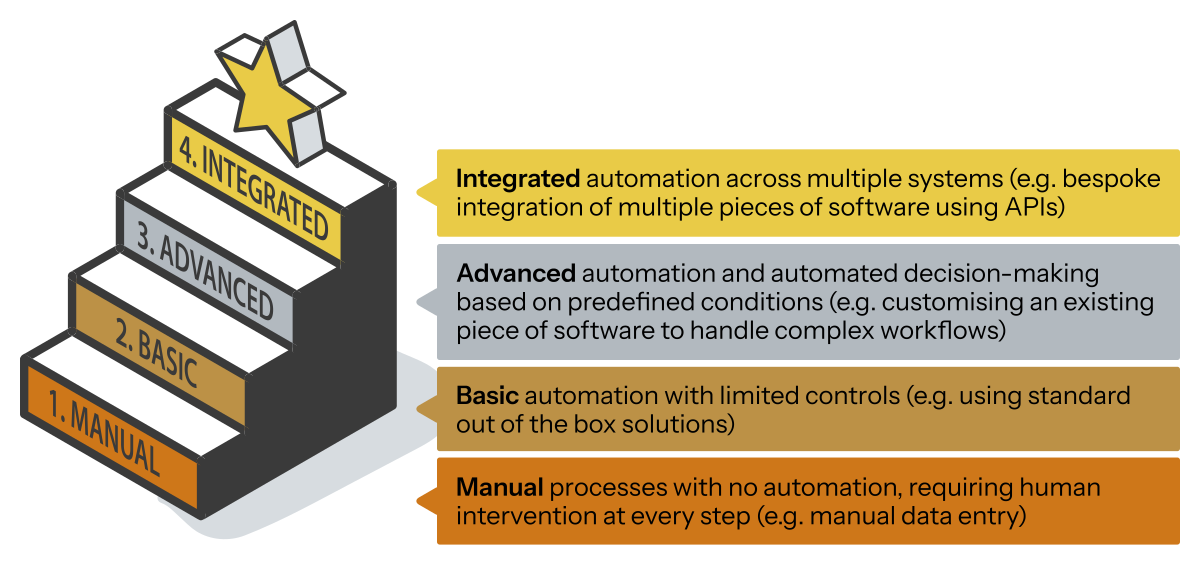
Finally, consider the complexity of the tasks you plan to automate. Some tasks might require simple automation tools, while others may need more complex, bespoke solutions. By thoroughly understanding the complexity and requirements of these tasks, you can make a more informed decision about which automation path to take.
Ultimately, this process will guide you toward one of three possible solutions: ‘out of the box’ solutions for straightforward needs, fully bespoke solutions for unique challenges, or a ‘middle ground’ solution that offers a balance between customisation and ease of integration.